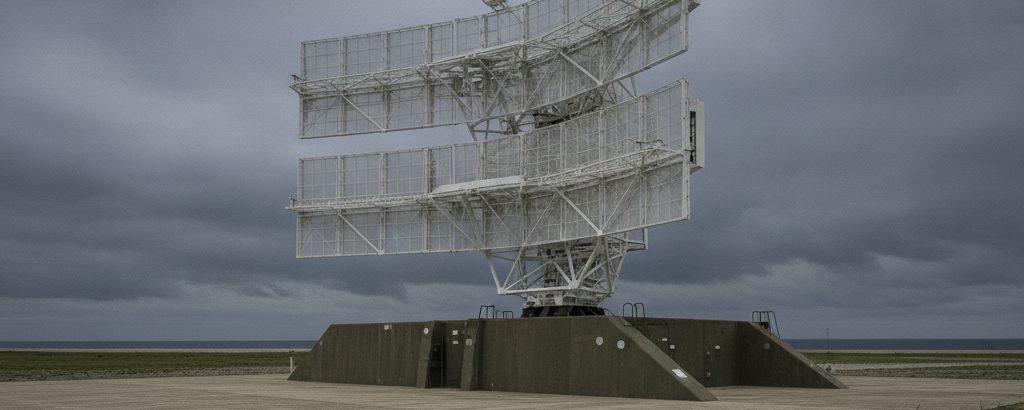
 Symbolbild · KI-generiert
Hypersonic Interceptor: What Consortium Selection Means for Defence Small Caps
When a Single Selection Changes Everything — the European Hypersonic Interceptor
Hypersonic weapons travel faster than Mach 5, can actively alter their flight path, and are virtually impossible to intercept with conventional systems. Europe has recognised this gap: the European Commission is on the verge of selecting one of two competing consortia to develop an interceptor against hypersonic and ballistic missiles. The goal is a system demonstrator by 2030. For many defence small caps, this moment is not just another news item — it is a structural turning point.
Selection processes of this kind are not unusual in the defence sector, but their mechanics are frequently misunderstood. Investors who understand how consortium selections work, what book-to-bill truly measures, and why a losing consortium has not necessarily lost everything will make better-informed judgements — without being swept along by press releases.
Programme Phases and Risk Profile at a Glance (Risk level (1=low))
Consortium Programmes: How Large Defence Projects Are Structured
European defence programmes at system level follow a familiar pattern. Nation states or supranational institutions such as the European Commission or the European Defence Agency (EDA) issue a development tender. Industry consortia — typically led by one or two primes, meaning large system integrators — submit bids. Smaller companies participate as subcontractors or technology suppliers, frequently providing specialised components: seeker and sensor technology, propulsion systems, data links, structural elements, or security software.
The critical distinction with this class of programme is that it does not initially constitute a firm call-off with guaranteed revenue, but rather a framework for development work. A development contract secures funding for research and demonstrators — not necessarily series production. Only when a demonstrator becomes a certified system do production orders follow. Between contract award and first delivery, ten to fifteen years can easily elapse. For small caps, this means order visibility yes, immediate revenue no.

Book-to-Bill and Order Visibility: What the Mechanics Behind the Numbers Reveal
When a consortium is selected, one key metric improves for the companies involved: the book-to-bill ratio. It sets order intake (new orders received) against revenue. A value above 1.0 signals that more orders are coming in than are being fulfilled — the order book is growing. For small defence companies, a single won consortium programme can keep this figure above 1.0 for several quarters.
The market often reacts to the mere expectation of a contract win. This explains why defence small cap shares can rise considerably in the run-up to selection decisions — even before a single pound of revenue has been recognised. This pattern of expectation and disappointment is typical of speculative investments: if the company's own consortium is not selected, those share price gains can reverse very quickly.
A comparison from another industry makes this tangible: when the first national next-generation network programmes were awarded in the 2000s, suppliers tied to the losing network standard lost a significant portion of their market capitalisation within a matter of weeks — not because their technology was inferior, but because network effects and programme lock-in blocked access to follow-on contracts.
What the Losing Consortium Forfeits — and What It Does Not
The intuitive assumption is: the loser is out. The reality is more nuanced. A losing consortium forfeits preferential access to that specific programme — but not necessarily to all related programmes. First, technology providers from the losing consortium may remain attractive as subcontractors to the winning consortium, particularly if they possess a niche technology with no direct competitor. Second, several related defence initiatives run in parallel across Europe and within NATO — a lost EU programme does not preclude national or alliance-wide contracts.
Third, it is worth noting that large programmes such as a hypersonic interceptor require years of development work. It does happen that a programme is re-tendered or technically restructured, bringing companies from earlier consortia back into the fold. Nevertheless, the following holds: an investor in a very small defence company that depends exclusively on this one programme carries a significant concentration risk.
| Phase | Significance for Suppliers | Risk Profile |
|---|---|---|
| Selection process under way | Anticipation, no secured orders | High — market prices in expectation |
| Consortium victory | Contractual framework, development funding | Medium — no series order, budget risk |
| Demonstrator phase (to 2030) | Ongoing development remuneration | Medium — technical failure possible |
| Approval & series production | Firm call-offs, book-to-bill >1 | Lower — but often >10 years away |
Reading Consortium Membership — What Investors Can Look For
For investors interested in small defence companies, the question of consortium membership is one of the most relevant due diligence questions — and simultaneously one of the hardest to answer. Large primes such as Airbus, Leonardo, MBDA, or Thales rarely communicate their consortium structure in full. Smaller suppliers occasionally mention their involvement in quarterly updates or at investor days, though not always consistently.
Structurally, a three-step approach is advisable: (1) Identify whether a company is represented in any of the competing consortia at all — this can often be inferred from press releases issued by the primes. (2) Estimate what share of the company's total revenue the potential programme represents: if the programme accounts for less than ten per cent of revenue, the downside risk to the overall position is limited. If it is the sole meaningful pipeline, the risk of a total loss of capital is real. (3) Check the cash runway — that is, how long the company can operate without new orders or a capital increase. For unprofitable small caps, this figure determines whether a company can survive bad news or is forced into a dilutive capital increase (share issuance).
Investors should be particularly prepared for the latter scenario: a losing defence small cap that had staked everything on this programme could be forced to issue fresh shares on unfavourable terms to keep operations running. This dilutes existing shareholders and can put additional pressure on the share price — regardless of how promising the underlying technology may be.
Between Programme Risk and Long-Term Structural Story
The European hypersonic defence programme represents a broader shift: Europe is structurally increasing its defence spending, and demand for advanced interceptor systems is likely to persist for decades. That is the structural story. The short-term dynamic, however, is shaped by selection processes, budget cycles, and technical milestones — a level at which individual decisions can determine the market capitalisation of small suppliers within a matter of weeks.
Anyone wishing to invest in this space faces a classic trade-off in the defence sector: the long-term structural story is compelling, but the path there is paved with programme-related binary events. A consortium win is not revenue, a framework agreement is not a firm order, and a system demonstrator is not a certified production-ready product. These distinctions separate well-informed market participants from those who react to press releases.
Total loss of capital is a real scenario in this segment — not because of poor technology, but because programme delays, political reprioritisation, or simply losing the selection process can exhaust the cash runway of a small company before the first series order arrives. This article is intended solely for financial education and does not constitute investment advice.
Key Terms for European Defence Programmes
- Consortium
- A grouping of several companies that submit a joint bid for a large project. A prime takes on system integration; subcontractors supply components or technology.
- System Demonstrator
- A functional prototype at system level that proves technical feasibility — but is not yet a production-ready product. The planned hypersonic interceptor demonstrator is scheduled for completion by 2030 according to programme plans.
- Book-to-Bill
- The ratio of order intake to revenue over a given period. A value above 1.0 means the order book is growing; a value below 1.0 signals contraction. For defence small caps, this is a key leading indicator.
- Framework Agreement
- A contract that defines the maximum quantity and price for potential call-offs, but contains no binding order. Only a firm call-off (individual order) generates secured revenue.
- Cash Runway
- The period a company can sustain operations using its liquid funds without new revenue or additional capital. Calculated as cash on hand divided by the monthly burn rate. If it falls below six to nine months, a capital increase is often unavoidable.
- Dilution
- When a company issues new shares, the percentage stake of existing shareholders decreases. If the capital increase is necessary at a low price (e.g. following bad news), existing shareholders can lose twice over: through a falling share price and through a reduced ownership stake.
- Concentration Risk
- The risk that arises when a company derives the majority of its revenue from a single programme, customer, or contract. If that anchor falls away, there is no buffer — a particularly critical factor for small defence companies with a narrow order base.
⚠️ Important notice: This article is for informational and educational purposes only. It does not constitute investment advice, a recommendation, or a solicitation to buy or sell any security. Investments in small-cap exploration and mining companies carry a high risk, including the potential total loss of capital. Before making any investment decision, consult a registered financial advisor and conduct your own analysis. Aktienatlas-Redaktion is not responsible for decisions taken based on the content published here.
Educational content only, not investment advice. Small caps are highly speculative and total loss is possible.