 Symbolbild · KI-generiert
Green Ammonia: How Derivatives Unlock Hydrogen Exports
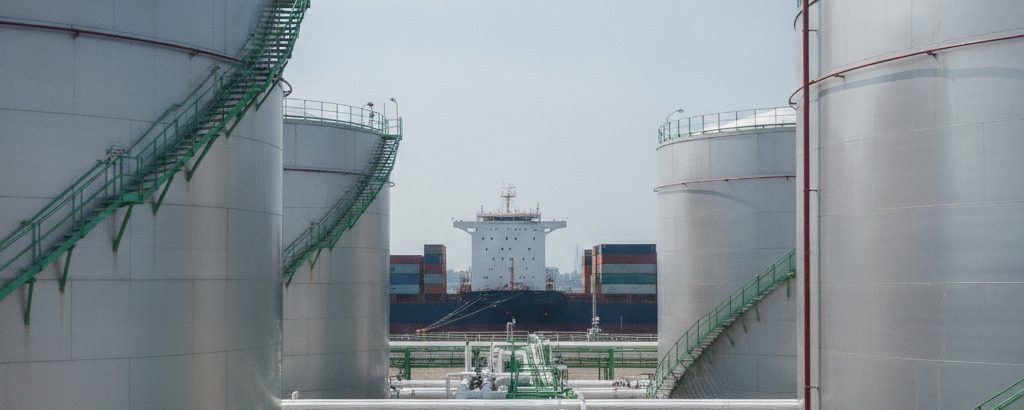
Ammonia Instead of Hydrogen: Why the Transport Problem Is Reshaping the Supply Chain
Green hydrogen has been hailed as a cornerstone of the energy transition for years — yet its physical properties make it an exceptionally difficult export commodity. The gas must either be liquefied at minus 253 degrees Celsius or stored under extreme pressure before it can be loaded onto a ship. The costs are enormous, and the required infrastructure is absent from most ports around the world. Green ammonia (NH₃) solves this problem elegantly: it liquefies at minus 33 degrees Celsius, makes use of the petrochemical industry's globally existing infrastructure, and can be used directly as a marine fuel or for power generation.
It is precisely this logic gap between hydrogen and its derivatives that is now attracting the attention of global energy partnerships. AM Green, an Indian producer, has concluded an agreement to supply green ammonia to a Japanese initiative backed jointly by Japan's largest power generator and several shipping companies. The aim is to establish a commercial, ocean-freight-based supply chain — a step that the industry regards as a significant marker of maturity.
For investors seeking orientation in the CleanTech small-cap segment, the key question is: what shifts in valuation models when it is not the electrolyser manufacturers but the ammonia converters and logistics enablers that secure the first genuine offtake agreements?
Liquefaction Temperatures Compared (°C)
Why Japan Is Becoming the Gravitational Centre of Green Ammonia Imports
Japan today imports almost all of its energy — coal, oil, and gas arrive by ship. The country's decarbonisation strategy therefore does not rely on self-sufficient domestic generation but on transforming existing import routes: away from fossil fuels and towards green ammonia and green hydrogen. National energy policy has established dedicated support mechanisms for this purpose, and major utilities such as JERA — Japan's largest power generation company — are actively engaged in this transformation.
India, in turn, offers complementary advantages: low-cost solar power potential, political commitment to industrialising the hydrogen economy, and access to ports that enable exports to the Pacific region. AM Green has positioned itself in this context as a bridge between India's renewable energy capacity and Japanese import demand.
The Japan–India supply route is symbolically significant: it demonstrates that the market for green ammonia is not confined to pilot projects but is moving towards commercial scale. Nevertheless, the Final Investment Decision (FID) remains the critical step — many announced projects have not yet progressed beyond the planning phase.
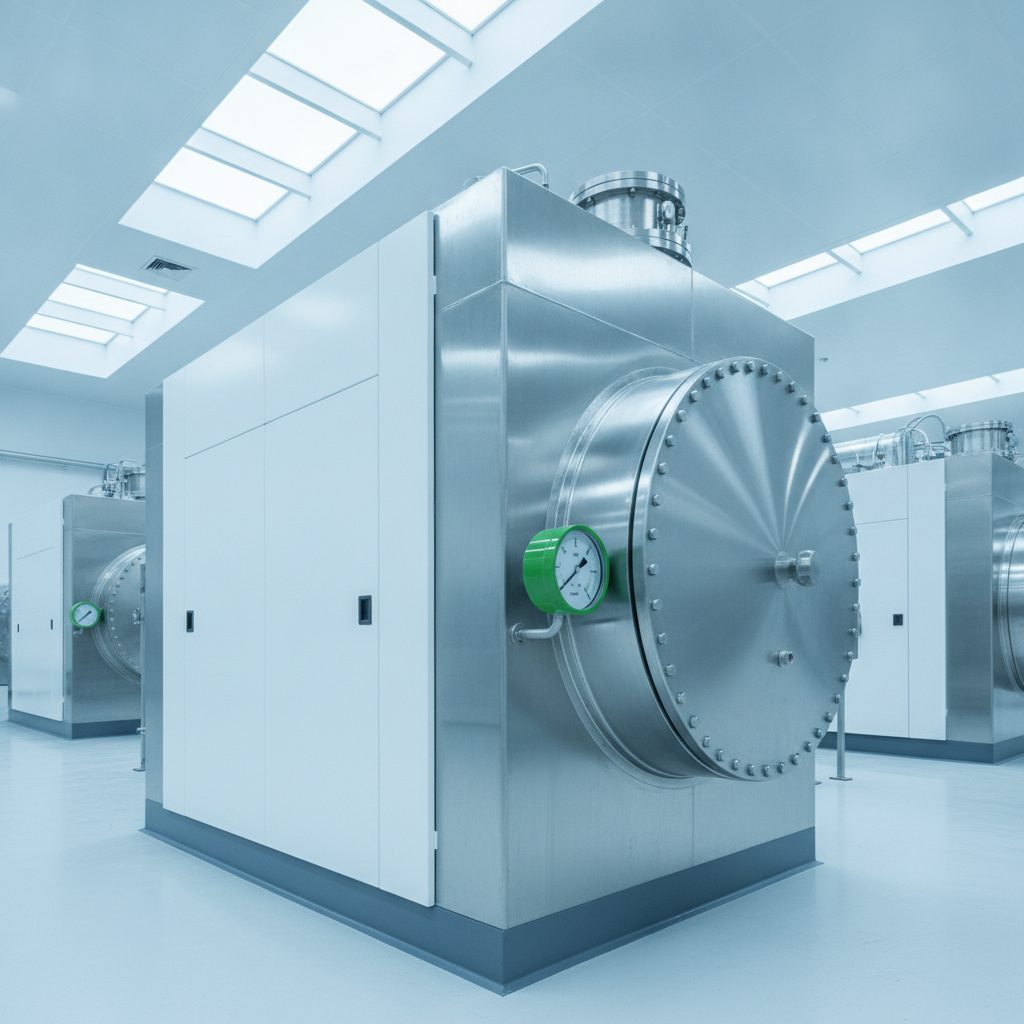
Three Stages of the Value Chain — and Who Really Benefits
To understand which types of companies could benefit from this dynamic, it is worth examining the value chain. It breaks down broadly into three segments:
| Value Chain Stage | Players | Financing Model |
|---|---|---|
| Production (Electrolysis + Ammonia Synthesis) | Electrolyser manufacturers, plant engineers | Often subsidy-dependent; FID still open |
| Logistics & Transport | Shipping companies, port operators, tanker manufacturers | Charter agreements, state co-financing |
| Offtake & Conversion | Power generators, chemical industry, bunkering operators | Offtake agreements, long-term contracts |
For small-cap investors, the crucial insight is this: companies already positioned in the logistics or offtake layer can generate real revenues sooner than pure electrolyser plays that are still waiting for production capacity to scale up and for subsidies to materialise. This shifts the valuation model: while electrolyser manufacturers are often traded as options on a future hydrogen economy, logistics and conversion companies have business models that are potentially closer to profitability.
A related example from another technology cycle: in the early days of mobile telecoms, infrastructure suppliers (antennae, cabling) generated reliable revenues sooner than handset manufacturers — because infrastructure was booked independently of device hype. Ammonia logistics could similarly prove to be a stable "enabler" before the market for green hydrogen itself reaches maturity.
What Hyundai's Milestone Teaches Us About the Long Haul of the Energy Transition
For comparison, it is worth looking at hydrogen mobility: after 13 years on the market, Hyundai has crossed the threshold of 50,000 fuel cell vehicles sold. This demonstrates that hydrogen technologies have very long lead times — and that companies in this sector require a long cash runway to survive until market readiness.
Thirteen years, 50,000 units — these are benchmarks that small-cap investors should internalise. Companies with no revenue and a high monthly burn rate are often unable to bridge such a period under their own steam. Capital increases (share issuances) become necessary, diluting existing shareholders. In the worst case — if a funding round fails or an offtake agreement falls through — a total loss of capital is a real scenario that must not be underestimated.
Green ammonia accelerates the timeline somewhat, because it builds on existing infrastructure. Nevertheless, the capital intensity of the plants, the dependence on political frameworks, and the long contract durations remain structural risk factors that can put valuations under pressure.
Key Takeaways from the Green Ammonia Supply Chain
The emerging supply chain for green ammonia shows that the energy transition does not unfold in a linear fashion. It is not the "purest" product — pure hydrogen — that wins market share first, but the most manageable one. As both a carrier and an end product, ammonia is a pragmatic bridge that makes use of existing port, storage tank, and combustion infrastructure.
From a market perspective, three observations can be drawn from this:
- Derivatives before pure form: During technological transition phases, intermediate products and carriers — not the ultimate end product — frequently gain first market access. This shifts which types of companies see revenues sooner.
- Geopolitical pairings matter: India–Japan is no coincidence. Countries with a surplus of renewable energy for export and countries with import needs form strategic pairs — much like Australia–Japan or Chile–Europe. Small caps operating within these corridors benefit from politically supported trade flows.
- FID is the decisive checkpoint: Until the Final Investment Decision has been made, a project remains a promise. Investors should understand the difference between a memorandum of understanding, a framework agreement, and a binding offtake agreement — these three stages differ significantly in terms of financing risk.
The ammonia market will not transform the hydrogen sector overnight. But it provides an instructive example of how energy transition technologies actually gain momentum: not through a single breakthrough, but through pragmatic interim solutions that utilise existing logistics infrastructure and scale incrementally.
Key Terms: Green Ammonia
- Green Ammonia
- Ammonia (NH₃) produced using green hydrogen and renewable electricity via the Haber-Bosch process — without fossil fuels. It can be used as an energy carrier, marine fuel, or feedstock for fertiliser production.
- Final Investment Decision (FID)
- The binding decision by a company or consortium to finance and implement a project. Capital flows into construction only after the FID — prior to that, a project is considered speculative.
- Offtake Agreement
- A long-term contract in which a buyer commits to purchasing a specified quantity of a product at an agreed price. For producers, it is often a prerequisite for bank financing.
- Cash Runway
- The period a company can sustain operations using its existing liquid funds without raising new capital. Calculation: cash balance ÷ monthly burn rate. The shorter the runway, the greater the pressure to conduct a capital increase — which is often dilutive.
- Burn Rate
- The monthly net cash consumption of a company that generates little or no revenue. High burn rates in capital-intensive sectors such as hydrogen are a key risk signal.
- Framework Agreement vs. Firm Call-Off
- A framework agreement defines terms and maximum quantities but contains no binding obligation to purchase. Only a "firm call-off" or delivery instruction gives rise to an actual revenue entitlement.
- Dilution
- When a company issues new shares (capital increase), the percentage stake of existing shareholders in the company decreases — their ownership is "diluted". In capital-intensive small caps, this is a frequently underestimated risk.
⚠️ Important notice: This article is for informational and educational purposes only. It does not constitute investment advice, a recommendation, or a solicitation to buy or sell any security. Investments in small-cap exploration and mining companies carry a high risk, including the potential total loss of capital. Before making any investment decision, consult a registered financial advisor and conduct your own analysis. Aktienatlas-Redaktion is not responsible for decisions taken based on the content published here.
Educational content only, not investment advice. Small caps are highly speculative and total loss is possible.