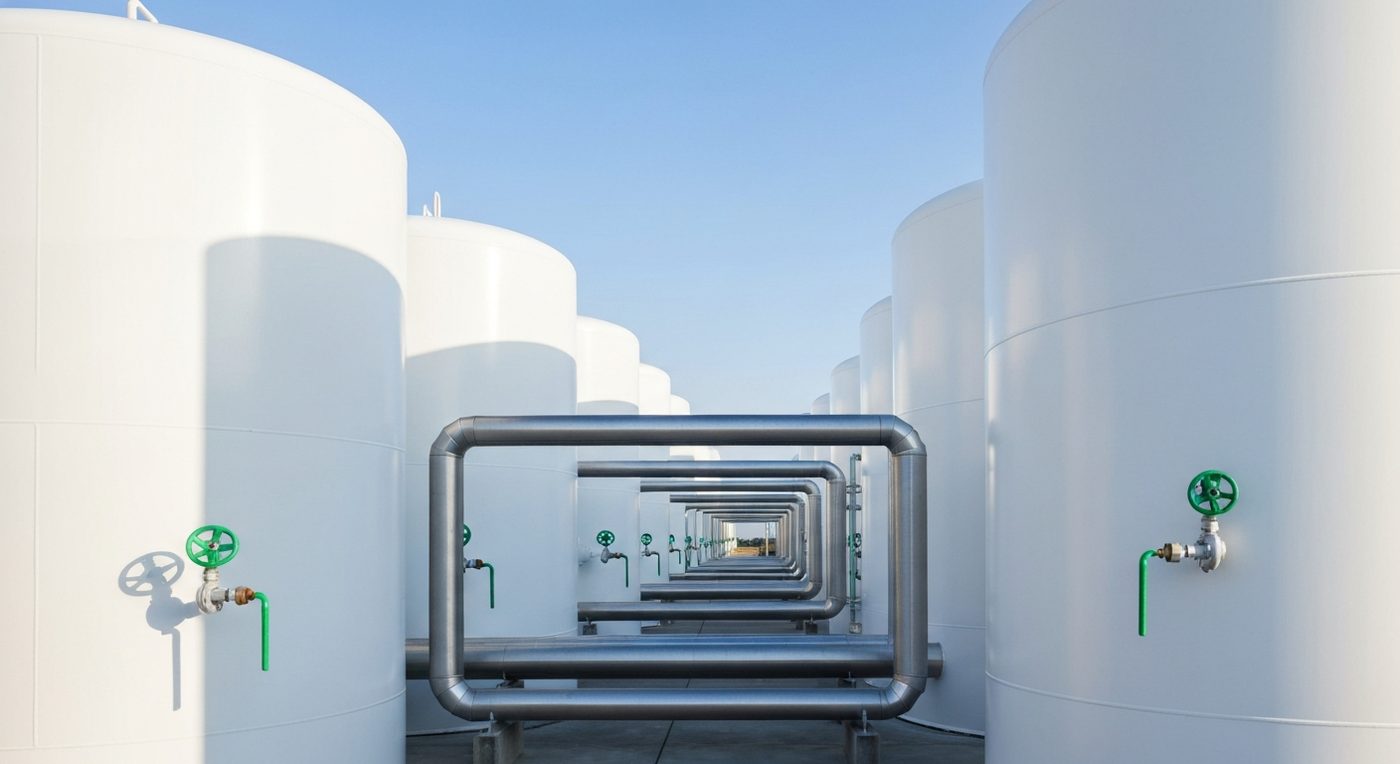
 Symbolbild · KI-generiert
EU Subsidies for Hydrogen: Opportunity and Dependency at Once

When Brussels Opens the Purse — and What It Really Means for Investors
The European Commission recently approved a Dutch public funding program worth €780 million for renewable hydrogen. Announcements like this regularly move prices across the entire sector — even at companies that have nothing to do with the specific program. Investors who are invested in, or considering, hydrogen small caps should understand what lies behind such funding decisions, how the money actually flows, and where the structural risks sit.
Because one thing is always true about EU subsidies for cleantech companies: approved funding is not the same as disbursed funding. And a funding framework is not the same as a commercially viable business model.
Public Funding: Three Steps to Company Capital (Stage)
Three Steps Between a Funding Decision and Real Company Capital
EU state aid procedures follow a clear logic that investors should understand. First, the European Commission approves a national subsidy framework — this is the political authorization for a member state (here: the Netherlands) to grant certain aid. This step does not confirm that a single euro has reached any company.
In a second step, projects must be tendered, evaluated, and awarded at the national level. Depending on the program and the authority involved, this can take months to years. Only in a third step — after defined milestones have been reached — are grants actually disbursed, often in tranches and subject to conditions.
For small caps operating in early development stages with a tight cash runway, this distinction can be existential. A pilot project waiting on awarded but not yet disbursed grants can fall into a funding gap — and must then either raise fresh capital through a share issuance (with corresponding dilution for existing shareholders) or scale back operations.
Subsidy Dependency: When a Business Model Rests on Political Decisions
The deeper structural problem for many hydrogen small caps is not the cash runway in the current quarter, but the long-term dependence on government support. Green hydrogen — produced by electrolyser from renewable energy — is still significantly more expensive today than fossil alternatives such as natural gas or grey hydrogen from steam reforming. Without subsidies or a high carbon price, it is not yet competitive in most applications.
This means many business models in this space are fundamentally dependent on the political framework. If the political landscape shifts — after elections, during budget cuts, or with a change in energy policy — the economic foundation of a company can erode within months. This is not a theoretical scenario: in the past, subsidy cuts for solar technology and wind energy have repeatedly triggered massive price collapses in affected small caps.
A second risk is concentration in a single funding market. Companies that are heavily active in one national market and depend on a single program have little buffer if that program expires or is revised. Companies with a broader footprint — projects in multiple countries, or with existing offtake agreements (i.e., binding purchase contracts for hydrogen) already in place — are structurally more resilient.
| Characteristic | Subsidy-Dependent Model | More Commercialized Model |
|---|---|---|
| Primary revenue source | Public funding & government programs | Offtake agreements / commercial customers |
| Risk from policy change | High (business foundation at risk) | Moderate (partial dependency) |
| Typical company stage | Pilot / early demonstration | Scaling / operations |
| Cash runway | Short to medium, often dependent on tranche disbursement | Longer, as revenues exist |
| Dilution risk | Higher (share issuances likely) | Lower with positive cash flow |
Why Funding Programs Can Still Be a Genuine Driver
The critique of subsidy dependency should not obscure the fact that government programs serve an important function in the early phase of a technology cycle. Much like solar incentives in the 2000s or state investments in the early semiconductor industry, they help finance cost deflation — that phase in which production costs fall through scaling and learning effects until technologies become competitive without subsidies.
In the hydrogen sector, cost trajectories are relatively well modeled: electrolysers become cheaper as production capacity rises. Renewable energy — the primary cost driver in hydrogen production — is also getting cheaper. Funding programs like the Dutch one bridge this gap. From a sector perspective, that is rational.
For small-cap investors, this means: the decisive valuation parameter is not whether a company receives funding today, but whether it can credibly demonstrate how its business model remains economically viable as subsidies decline or carbon prices rise. Companies that describe this path concretely — with realistic cost curves, technological efficiency gains, and identified end customers — stand on a different footing than those simply waiting for the next grant notification.
Also notable in the broader debate is the question of whether hydrogen as an energy carrier is even scalable in certain applications — such as supplying data centers, for instance. Energy density, storage logistics, and infrastructure costs present significant hurdles in some use cases that even generous public funding cannot fully resolve. Investors should therefore examine the specific application scenarios of their portfolio companies, not just their funding status.
What Investors Can Take Away from the EU Decision
The European Commission's decision is a political signal about the direction of EU energy policy — it confirms that green hydrogen continues to be viewed as strategically important. For the broader sector, that is a stabilizing message. For individual small caps, however, it is no substitute for a sober analysis of company fundamentals.
Anyone evaluating hydrogen small caps should systematically ask the following questions: How large is the current cash runway, and does it extend to the next planned milestone payment? What share of projected revenues depends on funding programs that have not yet been disbursed? Are there already binding offtake agreements in place, or are these letters of intent? And: how has management performed historically on cost projections — were milestones met on time and within budget?
Speculatively valued small caps without positive cash flows are particularly vulnerable in this sector. A delayed grant notification, a cancelled tranche, or an unfavorable regulatory change can force a capital increase within a short period — diluting existing shareholders. In the worst case, if no follow-on financing is secured, a total loss of capital is a real risk. This article does not constitute investment advice; it is intended solely for financial education purposes.
Key Terms for Hydrogen Investors
- Green Hydrogen
- Hydrogen produced by electrolysis of water using renewable electricity. Low-emission, but currently more expensive than fossil alternatives (grey or blue hydrogen).
- Electrolyser
- A device that splits water into hydrogen and oxygen using electrical current. The capital cost per kilowatt of electrolyser capacity is a central cost driver in the sector.
- Funding Framework vs. Funds Disbursed
- An approved funding framework authorizes a state to grant subsidies — it does not mean that money has been paid out. Actual disbursement only occurs after project award and milestone fulfillment.
- Offtake Agreement
- A binding long-term purchase contract in which a customer commits to buying a defined volume of hydrogen at an agreed price. Considered a stronger financing signal than a letter of intent.
- Cash Runway
- The number of months a company can sustain operations with its current cash balance at a given monthly burn rate, without raising new capital. The shorter the runway, the more urgent the refinancing need.
- Dilution
- When a company issues new shares (capital increase), the percentage ownership of existing shareholders decreases. For small caps with frequent capital needs, dilution is a structural risk.
- Cost Deflation
- The reduction of unit costs through rising production volumes and technological learning effects. In the hydrogen sector, cost deflation for electrolysers is the key to competitiveness without subsidies.
⚠️ Important notice: This article is for informational and educational purposes only. It does not constitute investment advice, a recommendation, or a solicitation to buy or sell any security. Investments in small-cap exploration and mining companies carry a high risk, including the potential total loss of capital. Before making any investment decision, consult a registered financial advisor and conduct your own analysis. Aktienatlas-Redaktion is not responsible for decisions taken based on the content published here.
Educational content only, not investment advice. Small caps are highly speculative and total loss is possible.