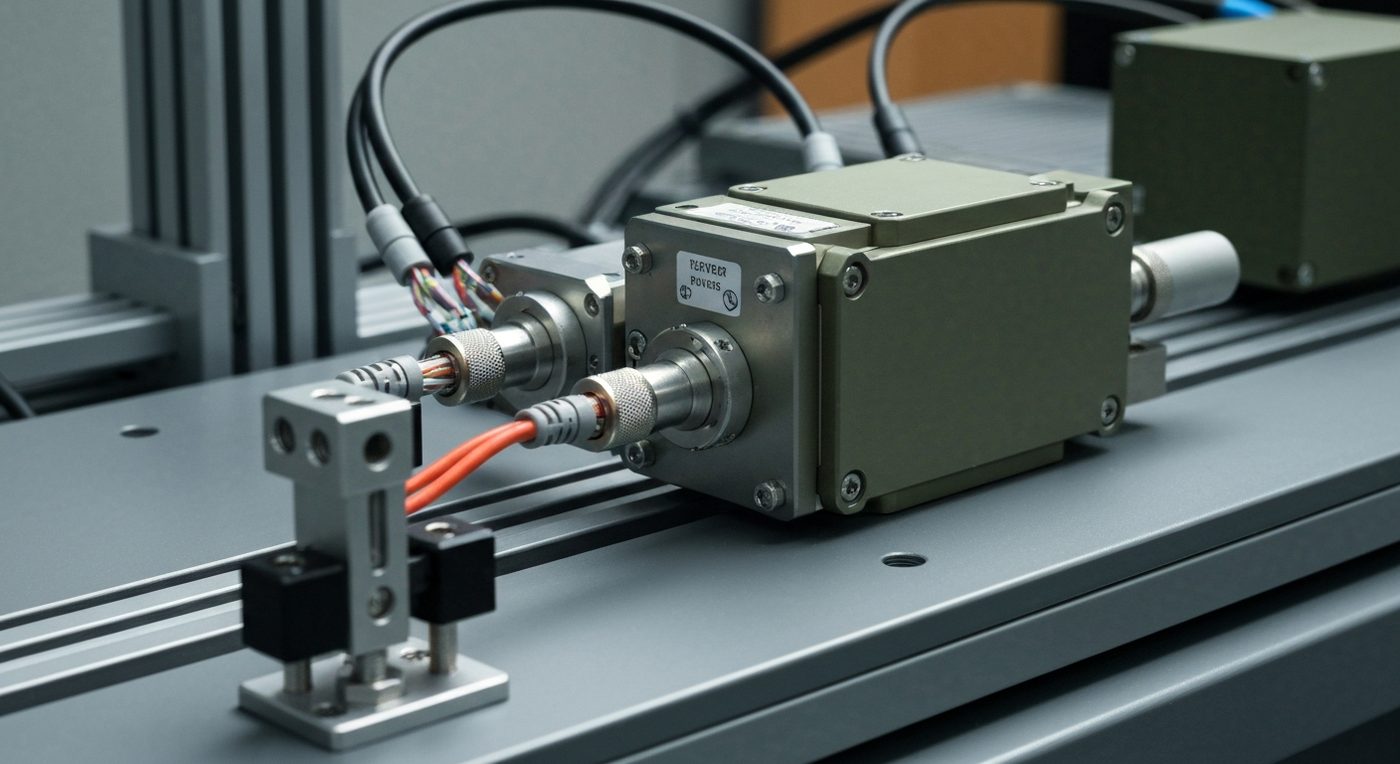
 Symbolbild · KI-generiert
Defense Contracts in Space: Large Corp vs. Start-Up — What Investors Should Know

Two Contracts, Two Worlds — but the Same Budget
When defense ministries award satellite programs, the headlines almost always go to the familiar names. Yet occasionally a small window opens into the small-cap segment: the U.S. Space Force has awarded start-up K2 Space a $22.9 million contract to demonstrate optical laser communications in orbit. At the same time, Airbus Defence & Space and Thales Alenia Space secured the contract to build a successor satellite for Spain's SpainSat military communications satellite. Two transactions, two entirely different scales — and yet both represent the same structural phenomenon: government space budgets are increasingly being spread across multiple contractors, and a share of that spending is now reaching smaller companies that are often not yet publicly listed or have only recently come to market.
For investors searching for opportunities in the defense and space segment, this pattern is instructive. It is worth understanding both contract types in detail — their mechanics, their risks, and what they reveal about how government procurement actually works.
How Government Space Procurement Really Works
Government space contracts can broadly be divided into two categories: fixed-price contracts for defined systems and development mandates, which are often awarded as SBIR/STTR programs or as so-called "Other Transaction Authority" (OTA) contracts.
The SpainSat successor is a classic procurement contract. Spain requires an operational military communications system; two established European defense primes — Airbus and Thales — deliver a mature system to defined specifications. Such contracts run for many years but also tie up enormous resources and require a proven track record of certification and delivery capability. For a start-up, they are de facto inaccessible.
The K2 Space contract follows a different logic: the U.S. Space Force wants to test new technologies before committing to a specific system. The $22.9 million contract funds a demonstration — two small satellites are to carry optical terminals that connect military systems in orbit via laser communications. The goal is not a finished product, but a proof of technology. This is the critical distinction: the contract objective is validating a capability, not serial delivery.
Contract Concentration: The Double-Edged Sword for Micro-Caps
This is the real lesson for small-cap investors. When a young space company — often with just a few dozen employees and no profitable operating history — receives a government contract worth tens of millions of dollars, it can transform the entire financial picture in the short term. The cash runway (cash balance divided by monthly burn rate) extends considerably; the looming risk of a capital increase (share issuance) recedes into the background.
Yet that same concentration carries a structural risk: when a single government contract accounts for 80 or even 100 percent of revenue, the company's survival depends on a single decision-maker. Program cuts in the defense budget, a technology shift, or simply a disappointing demonstration result can reduce revenue to zero overnight.
A comparison from space history makes this tangible: when NASA awarded early development contracts under the Commercial Crew program, smaller providers also benefited. Yet only a few — SpaceX and Boeing — ultimately received the large follow-on contracts. Many smaller companies that had been funded in earlier phases disappeared or were acquired. The development mandate was a stepping stone, not a guaranteed continuation.
For investors this means: a government contract awarded to a micro-cap is an important data point, but it is not a quality seal for long-term viability. The book-to-bill ratio — that is, the ratio of order intake to actual billed revenue — is frequently distorted for young space companies, because a single large contract inflates the metric optically without the underlying operational capacity to support it.
| Characteristic | Classic Major Contract (SpainSat type) | Development Mandate (K2 Space type) |
|---|---|---|
| Contractor type | Established system integrator | Start-up / micro-cap |
| Contract objective | Operational system | Technology demonstration |
| Duration | Multiple years, fixed milestones | Limited, demonstration-bound |
| Follow-on contract | Often governed by framework agreement | No automatic entitlement |
| Key risk for investors | Cost overrun, delay | Contract concentration, no follow-on |
Laser Communications as a Strategic Technology — and Its Valuation Implications
Optical satellite communications — transmitting data via laser rather than radio frequency — is not a niche topic. Military applications promise higher bandwidth, lower susceptibility to interference, and greater resistance to interception compared with conventional microwave links. The U.S. Space Force, as well as the ESA and European defense agencies, have all launched corresponding programs.
For investors, this means that companies able to demonstrate capability in this technology segment operate in a strategically relevant market with government-backed demand. That is, in principle, a positive environmental signal. But the segment is also capital-intensive, and the time between a technology demonstration and near-serial production can span five to ten years. An investor entering a relevant start-up today is taking a very early, very speculative position.
A further structural characteristic: many of these companies are not yet publicly listed, or have come to market only via SPACs or direct listings. Valuations at the time of listing frequently reflect expectations rather than realized revenues. If the first major government contract fails to materialize or does not lead to a follow-on order, a capital increase (share issuance) may become necessary — with corresponding dilution for existing shareholders.
What the Comparison of These Two Contract Types Teaches Us
The contrast between the SpainSat contract and the K2 Space mandate is more than a coincidental news moment. It illustrates how defense procurement in the space segment is structurally organized: large system contracts go to primes with a proven delivery track record; technology development is increasingly outsourced to younger, smaller companies — sometimes deliberately, to foster innovation and broaden the industrial base.
For small-cap investors, this means that government contracts awarded to micro-caps are not uncommon — but they are also not a seal of approval for long-term stability. The critical questions are: How high is the contract concentration? Is there a clear path from demonstration to serial production? How long is the cash runway if a follow-on contract fails to materialize? And finally: what dilution risks arise from a necessary capital increase?
An investment in space start-ups remains speculative in any case. The risk of a total loss of capital — that is, the complete loss of capital invested — is real for companies without sustainable profits and with high contract dependency, and must not be ignored in any personal assessment. This article is intended solely for educational purposes and does not constitute investment advice.
Key Terms for Space-Sector Investing
- Book-to-Bill Ratio (order intake ÷ revenue)
- Indicates whether a company is receiving more new orders than it is converting into revenue. A value above 1 signals growth in the order backlog; a value below 1 points to a shrinking backlog. For micro-caps with a single major contract, this metric can appear temporarily and misleadingly high.
- Framework Agreement vs. Firm Call-Off
- A framework agreement sets out terms and a maximum contract volume, but contains no binding purchase obligation. Only a firm call-off or individual order placed within the framework actually puts revenue in prospect.
- Cash Runway
- The remaining time before a company runs out of money, calculated as cash balance divided by the monthly burn rate (net cash outflow). The shorter the runway, the more urgent a new funding round becomes.
- Dilution (capital dilution)
- When a company issues new shares to raise capital, the percentage stake of existing shareholders in the company decreases. For space start-ups, dilution is a frequently underestimated risk.
- Technology Demonstration vs. Serial Contract
- A demonstration proves that a technical concept works. It does not automatically entitle a company to follow-on contracts — the decision on series procurement rests with the customer and may come years later, involve other vendors, or never materialize at all.
- SBIR/STTR (Small Business Innovation Research / Small Business Technology Transfer)
- U.S. government programs that direct research and development contracts specifically toward small businesses. Comparable mechanisms exist in Europe as part of Horizon programs or national defense research budgets.
- Contract Concentration
- The degree to which a company's revenue is concentrated in few or a single customer. High contract concentration significantly increases risk, as the loss of one customer can drastically reduce total revenue.
⚠️ Important notice: This article is for informational and educational purposes only. It does not constitute investment advice, a recommendation, or a solicitation to buy or sell any security. Investments in small-cap exploration and mining companies carry a high risk, including the potential total loss of capital. Before making any investment decision, consult a registered financial advisor and conduct your own analysis. Aktienatlas-Redaktion is not responsible for decisions taken based on the content published here.
Educational content only, not investment advice. Small caps are highly speculative and total loss is possible.