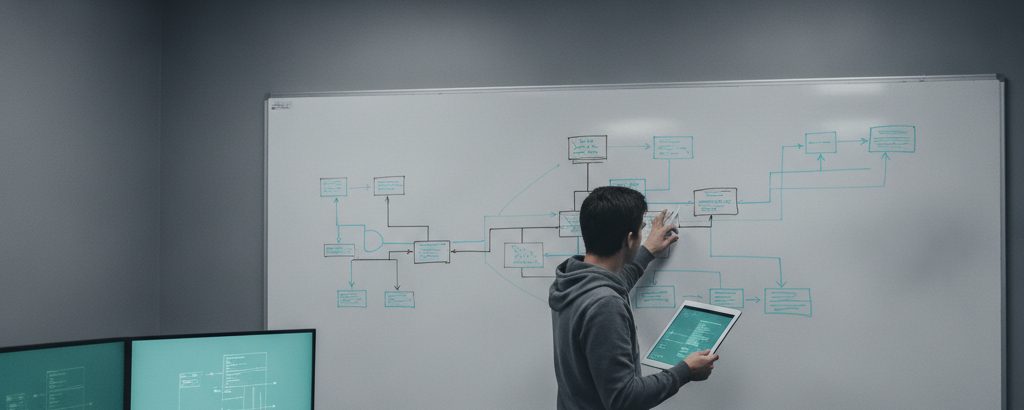
 Symbolbild · KI-generiert
Continuous Validation: How AI Is Reshaping the Cybersecurity Market
The Annual Penetration Test Has an Expiration Date
Imagine a bank that checks its vaults for vulnerabilities only once a year — leaving them unmonitored for the other 364 days. For a long time, that is exactly how cybersecurity worked at many companies: once a year they hired external specialists to conduct a so-called penetration test (pen test), probing their IT infrastructure for attack vectors. The result: a multi-page report that was often already outdated upon delivery — because threats, software versions, and network topologies now change on a daily basis.
That this model is under pressure is illustrated particularly clearly by a recent funding event in the U.S. market. Horizon3, a company specializing in automated security validation, closed a Series E round of $250 million, reaching a valuation of two billion dollars. Investors are sending an unambiguous signal: the market rewards the shift from episodic pen testing to continuous, AI-driven validation — and it does so with substantial valuation premiums.
Horizon3 Series E Funding Round 2024 (USD millions)
Why Annual Tests Are Structurally Obsolete
To understand the dynamics, it is worth examining the root causes. Three factors are driving the change simultaneously:
1. Attack surfaces are growing faster than teams. Cloud migrations, microservices, and remote work have multiplied corporate attack surfaces within just a few years. A pen test conducted in January may already have significant blind spots by March — because new services, APIs, or vendor access points have been added in the interim.
2. AI on the attacker side accelerates the pace. Threat actors are themselves using machine learning to scan for vulnerabilities automatically and develop exploits more rapidly. Organizations that test only once a year are fighting yesterday's moves against an adversary playing in real time today.
3. Regulatory pressure demands proof — not just intent. Frameworks such as NIS2 in the EU and the U.S. Cybersecurity Executive Order increasingly require demonstrable, continuous security controls. An annual report is no longer sufficient as compliance evidence. This creates structural demand for solutions that deliver ongoing data.
⚠️ Important notice: This article is for informational and educational purposes only. It does not constitute investment advice, a recommendation, or a solicitation to buy or sell any security. Investments in small-cap exploration and mining companies carry a high risk, including the potential total loss of capital. Before making any investment decision, consult a registered financial advisor and conduct your own analysis. Aktienatlas-Redaktion is not responsible for decisions taken based on the content published here.
Educational content only, not investment advice. Small caps are highly speculative and total loss is possible.