 Symbolbild · KI-generiert
Camera vs. Lidar: Cost Curves Decide the Sensor Race in Autonomous Driving
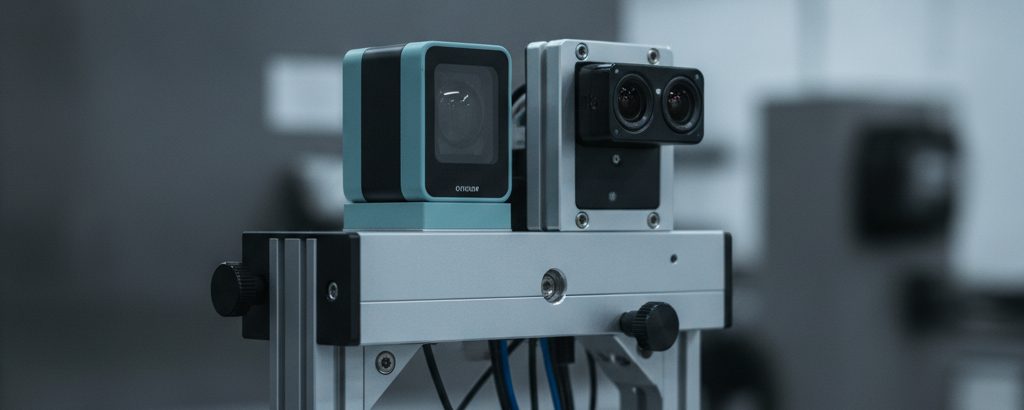
Grey Kittens on Dark Tarmac – a Technical Dilemma with Stock-Market Consequences
A seemingly mundane everyday problem reveals one of the most fundamental weaknesses of camera-based driver assistance systems: small, dark-coloured animals on low-contrast surfaces at night are extremely difficult for camera sensors to detect reliably. This low-light scenario is no edge case — it sits at the heart of an industry debate that moves billions in investment and affects multiple stock-market segments. Understanding the sensor battle between camera-based architectures and lidar-based systems also explains why specialised suppliers and fabless chip developers in the sensor-fusion space could be among the most interesting — and most risky — small-cap positions of the coming years.
The autonomy sector is passing through a phase in which technological promises are meeting commercial reality. For investors in small, often still unprofitable companies, the key question is not which technology is physically superior, but which cost curve falls faster and which platform secures the decisive design wins in the next generation of vehicles.
Cost Drivers by Sensor Type (Relative Complexity (1–10))
Why the Sensor Architecture Question Remains Completely Open
The two dominant camps can be sketched out as follows. On one side stand systems that rely exclusively on cameras and neural networks — the underlying conviction being that sufficient training data and capable AI models can compensate for the physical limits of light. On the other side stand so-called sensor-fusion architectures, which combine cameras with lidar (Light Detection and Ranging) and, in some cases, radar, to produce a redundant and weather-resilient environmental model.
Lidar emits laser pulses and measures their return time to create precise 3D point clouds — independently of ambient light and with significantly greater depth precision than cameras. The classic objection: lidar units are expensive, mechanically fragile, and substantially increase the bill of materials. Yet this objection is losing force. Solid-state lidar modules, which contain no moving parts, have cut their unit price dramatically over the past five years.
In parallel, the market for autonomous specialised vehicles is growing — for example, electric shunting trucks in logistics. Companies such as Outrider (an AI start-up operating self-driving electric yard trucks) are trialling exactly these systems in pilot projects with logistics providers. Such pilot projects matter, but investors must draw a clear distinction: a pilot project is not a final investment decision and not a secured order backlog. It is a proof of feasibility — nothing more, nothing less.

Three Mechanisms Shaping the Sensor Market for Small Caps
For investors who are active in this space or are evaluating it, three market mechanisms that structure competition are worth examining closely:
1. Design-win dynamics: In automotive electronics, design wins determine whether a supplier's component is built into a new vehicle model. A company that secures a design win early — with a Tier-1 automotive supplier or directly with an OEM — benefits from stable call-off volumes over the typically five-to-eight-year lifespan of that vehicle model. Fabless chip developers that design and commission specialised processing units for sensor fusion are particularly exposed here — in both the positive and the negative sense.
2. Platform dependency and switching costs: Once a sensor architecture has been integrated, it is rarely replaced, because certification costs (especially in the safety-critical automotive sector under ISO 26262) are enormous. This protects established suppliers — but makes market entry considerably harder for new players.
3. Regulatory pressure and liability: Safety authorities in the US (NHTSA) and Europe (UNECE) are gradually developing requirements for automated driving systems. Higher redundancy requirements structurally favour providers of multi-channel sensor systems — but could equally place purely camera-based systems under approval pressure.
| Sensor Type | Strengths | Weaknesses | Small-Cap Relevance |
|---|---|---|---|
| Camera + AI | Low cost, high resolution, colour recognition | Poor performance in low light, rain, and fog | Chip providers for edge-AI inference |
| Solid-State Lidar | 3D depth sensing, weather-resilient, light-independent | Higher cost, no colour signal | Specialised lidar suppliers, CMOS lidar developers |
| Radar | Low cost, functions in all weather conditions | Low resolution, no 3D image | Often integrated at Tier-1 supplier level |
| Sensor Fusion (combined) | Redundancy, robustness, regulatorily preferred | System complexity, integration effort | Fabless chip developers for fusion processors |
Where Specialised Small Caps Stand — and Where the Pitfalls Lie
The sensor competition is generating demand for highly specialised components: processing ASICs for real-time data fusion, laser driver ICs, SPAD-based (Single-Photon Avalanche Diode) optical receivers, and software stacks for sensor calibration. This is precisely where many small and micro caps are positioned — with the promise of high margins at low capital intensity through the fabless model.
Yet the autonomous driving market has already demonstrated, repeatedly, how long the ramp-up phases can be. Companies that listed five years ago with ambitious timelines for Level 4 autonomy have since completed substantial funding rounds — often with significant dilution of existing shareholders. The underlying principle: a company without meaningful revenues funds its operations through capital increases (share issuances). Each new tranche of shares reduces the percentage stake of all existing shareholders. Investors should therefore always monitor the cash runway — that is, how many months the company can continue operating at its current burn rate without raising fresh capital.
An example from the logistics sector illustrates the time dimension: autonomous yard-truck pilots such as Outrider's project with logistics providers represent a genuine milestone. Yet between a running pilot and a scalable, profitable rollout typically lie years of production ramp-up, service network build-out, and regulatory clearance. Investors who commit capital at an early pilot stage are effectively buying an option on a possible commercial success — not a secured revenue forecast.
What the Sensor Debate Means for Investors in the Long Run
The competition between camera-based and lidar-based architectures will not be resolved in a single segment. A differentiated outcome is more likely: high-volume consumer vehicles may continue to rely on lower-cost camera-based systems for longer — provided regulatory approval authorities permit this. Robotaxis, autonomous commercial vehicles, and safety-critical specialised machinery, by contrast, are expected to rely on redundant sensor-fusion architectures including lidar, where fault tolerance takes precedence over cost optimisation.
For small-cap investors, this means there is no single "winner" of the sensor debate that can be identified in blanket terms. Instead, it is worth asking precise questions about the addressable market: in which vehicle segment is the company positioned, how far advanced is the specific design-win process, and how long does current capital last to reach the next valuation milestone? These metrics are more reliable than any technological conviction.
The sensor debate is ultimately a proxy for a more fundamental question in technology investing: who survives long enough to profit from their own innovation?
Key Terms for Beginners: A Short Sensor Glossary
- Lidar (Light Detection and Ranging)
- A sensor technology that emits laser pulses and uses the return time of their reflections to create precise 3D point clouds of the surrounding environment. Functions independently of ambient light and weather conditions.
- Solid-State Lidar
- A lidar variant with no moving mechanical parts. More robust and lower in cost than conventional rotating lidar modules; a prerequisite for series production in the automotive sector.
- Sensor Fusion
- The combination of data from multiple sensor types (camera, lidar, radar) into an integrated environmental model. Increases robustness and redundancy, but requires specialised processing hardware.
- Fabless
- A business model in which a company designs chips but outsources manufacturing to specialised contract foundries. Capital-light, but dependent on third-party production capacity.
- Design Win
- A decision by a vehicle manufacturer or Tier-1 supplier to integrate a specific supplier's component into a new vehicle model. Typically secures several years of call-off volumes.
- Cash Runway
- The number of months a company can continue operating at its current monthly expenditure rate (burn rate) without raising new capital. Calculated as: cash balance ÷ monthly burn rate.
- Dilution
- The reduction in the percentage stake of existing shareholders caused by the issuance of new shares in a capital increase. A typical risk for growth-funded small caps without positive cash flows.
- SPAD (Single-Photon Avalanche Diode)
- A highly sensitive optical sensor capable of detecting individual photons (light quanta). A key component in modern lidar receivers; increasingly manufactured using standard CMOS processes.
⚠️ Important notice: This article is for informational and educational purposes only. It does not constitute investment advice, a recommendation, or a solicitation to buy or sell any security. Investments in small-cap exploration and mining companies carry a high risk, including the potential total loss of capital. Before making any investment decision, consult a registered financial advisor and conduct your own analysis. Aktienatlas-Redaktion is not responsible for decisions taken based on the content published here.
Educational content only, not investment advice. Small caps are highly speculative and total loss is possible.