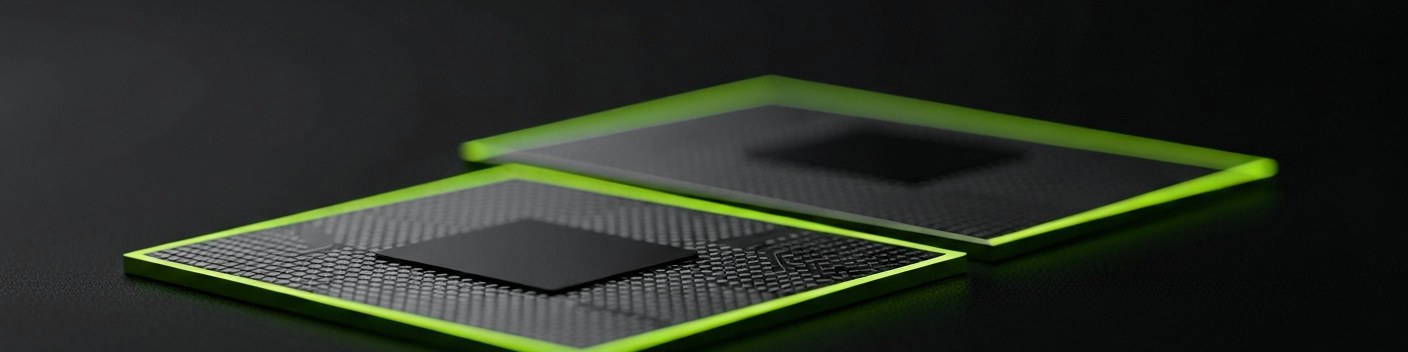
 Symbolbild · KI-generiert
AI in Orbit: What On-Board Inference Means for Space-Tech Investors
When the Cloud Leaves the Planet
For decades, satellite technology has followed a straightforward principle: the satellite collects data — imagery, signals, telemetry — transmits it to Earth, and data centres handle the actual analysis from there. That division of labour was not a matter of ideology but of practical constraint: computing capacity in space was limited, energy was scarce, and the qualification requirements for space-grade hardware were extraordinarily demanding.
That foundational assumption is now shifting. In 2025, Google became the first to successfully activate a Tensor Processing Unit (TPU) — a chip designed specifically for AI computation — in orbit. The satellite is running a language model from the Gemma 4 family by Google DeepMind. The system responded to a prompt without the computation being routed through a ground station. In parallel, the start-up Satlyt is exploring approaches to operating satellites as virtual data centres. The message is the same: inference — the process of applying a trained AI model to new inputs — is increasingly happening where the data originates.
For investors tracking space-tech small caps, this opens up a new segment. But as with any technological threshold, who benefits, who gets displaced, and how large the risks are depends on the specific position within the value chain.
Value Chain Layers of Orbital AI
Three Layers, Three Markets, Three Risk Profiles
The value chain for orbital AI inference can be divided into three layers, each with its own market dynamics and risk profile.
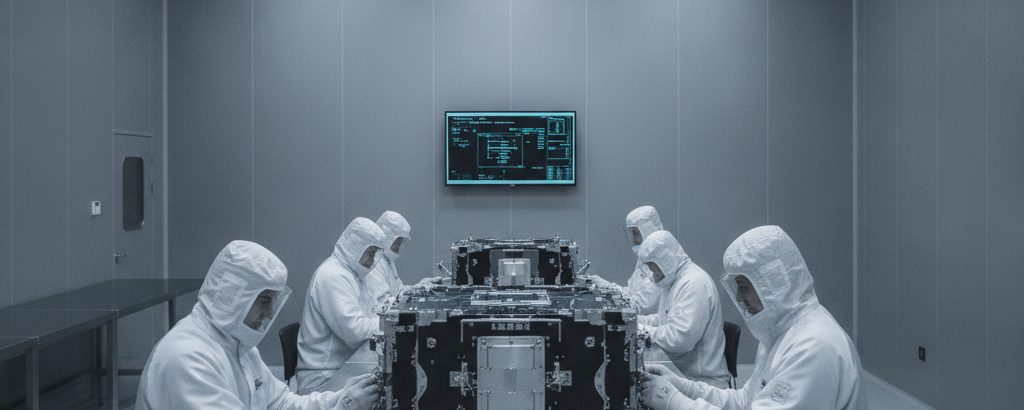
Layer 1: Payload Hardware — This encompasses the AI chips themselves, together with the associated thermal management and radiation-hardening architecture. In space, qualifying electronics is an extraordinarily demanding process: cosmic radiation can induce bit errors, temperature swings of over 200 degrees Celsius between sunlit and shadow phases stress solder joints, and the vacuum environment requires passive cooling. Components must be qualified to standards such as MIL-SPEC or ESA-ESCC — a process that takes years and ties up capital. Small caps operating in this segment frequently face a long lead time with no revenue.
Layer 2: On-Board Software and Inference Frameworks — This layer involves compressing AI models (through quantisation and pruning) so that they can run on energy-constrained hardware with limited working memory. This field is software-oriented and therefore more capital-efficient — though it is also more easily replicated and correspondingly vulnerable to margin pressure from larger competitors.
Layer 3: Ground Segment Integration — The outputs of orbital inference must be fed into ground systems in real time or near real time. Companies supplying protocols, gateways, and data pipelines for this segment benefit from growing demand for low-latency connections — but are equally dependent on satellite operators adopting their standards.
| Value Chain Layer | Capital Requirement | Market Entry Barrier | Typical Risk |
|---|---|---|---|
| Payload Hardware (chips, thermal) | Very high | Very high (space qualification) | Extended cash burn with no revenue |
| On-Board Software / Inference Frameworks | Medium | Medium | Margin pressure from Big Tech |
| Ground Segment Integration | Low–Medium | Medium (standardisation question) | Platform dependency |

The Design Win as Tipping Point and Bottleneck
In the space industry, the term design win is central: it refers to the moment at which a component supplier is selected as the preferred vendor for a satellite programme — often years before the first revenue materialises. A design win with an operator planning a constellation of several hundred satellites could theoretically represent a multiple of the company's current annual revenue. This explains why equity markets sometimes react sharply to such announcements before a single pound has changed hands.
Yet design wins are not order backlog in the conventional sense. A framework agreement — an expression of intent to collaborate on a preferred basis — is fundamentally different from a firm call-off order with a binding delivery schedule and payment obligation. When reading announcements about "strategic partnerships" between a space small cap and a major satellite operator, it is therefore worth distinguishing carefully: is there already a binding order volume (firm order intake), or is this merely a letter of intent?
A comparable pattern is well known from the semiconductor industry: when a chip start-up is included in the reference design of a major device manufacturer, the share price rises. But the path to meaningful revenue typically takes 18 to 36 months — and during that period the company must maintain its cash runway.
Concentration, Dependency, and the Quiet Risk from Big Tech
Google's move into orbit illustrates a structural risk for space-tech small caps: when large technology groups with their own chip designs (TPU, Google's proprietary AI accelerators), their own language models (Gemma), and their own satellite infrastructure enter the segment, the competitive landscape changes fundamentally.
On one hand, demand is created for specialised suppliers — much as the cloud data centre boom also drove the market for cooling systems, specialist cabling, and networking components. On the other hand, there is a real risk that a dominant platform operator will vertically integrate its own solutions and displace external providers. For small caps, the critical question is whether they are positioned as a supplier or as a potential competitor.
A further concentration risk lies in the customer base. Many space-tech small caps have one or two major anchor clients — often government agencies or state space organisations. Should such a contract lapse or be delayed, the entire revenue plan can unravel. In a sector that already operates with long development cycles and high capital consumption, this dependency is a significant risk factor.
There is also a technology risk to consider: orbital AI inference has not yet been proven at commercial scale. Google's test was a single demonstrator, not a series product. The journey from a successful technology demonstrator to a qualified, scalable product is particularly long and capital-intensive in the space industry. Start-ups such as Satlyt are still in early testing phases — and the risk of failure is correspondingly high.
What Investors Can Take Away from This Segment
The activation of an AI chip in orbit marks a technological inflection point, but not yet an established market. Several structural lessons can be drawn for small-cap investors.
First, the value chain layer is decisive. Companies close to hardware, with long qualification cycles, carry a different risk profile from software-oriented providers. A blanket view of "good for all space-tech stocks" falls well short of the mark.
Second, the distinction between a letter of intent and firm order intake deserves consistent attention. Press releases about partnerships or design wins are a signal, but not revenue — and no guarantee of future earnings.
Third, for unprofitable space-tech small caps, cash runway is the most important near-term survival metric. Companies reliant on capital increases risk diluting existing shareholders. In the worst case — a technology setback, a delayed contract, a difficult market environment — a total loss of capital is a realistic scenario. This is not a theoretical extreme but a structural characteristic of speculative small caps in capital-intensive markets.
Fourth, competitive analysis is asymmetric: when Google, Amazon, or other hyperscalers move directly into orbital AI infrastructure, it changes the rules of the game for all smaller participants — regardless of whether they supply hardware, software, or integration services.
Orbital AI inference is a real and evolving technology field. But between a successful technology test in space and a viable business model for a listed small cap lies a considerable distance — and that is where most of the action happens.
Key Terms Explained
- Inference (AI)
- The process of applying an already-trained AI model to new inputs — as distinct from training, in which the model learns from data in the first place. Inference is less computationally intensive than training, but remains energy-hungry.
- TPU (Tensor Processing Unit)
- A specialised processor developed by Google and optimised for AI computations (matrix multiplications). It can operate significantly more efficiently than conventional CPUs or GPUs for AI workloads.
- Design Win
- The selection of a component supplier as the preferred vendor for a development or production programme — often years before the first revenue and without any guarantee of a specific order volume.
- Cash Runway
- A company's cash balance divided by its monthly burn rate (net cash outflow). It indicates how many months the company can operate without new financing.
- Order Intake vs. Letter of Intent (LOI)
- Firm order intake (a firm call-off) is a binding purchase commitment. A Letter of Intent (LOI) or framework agreement is an expression of intent without a binding volume — a material distinction in both legal and commercial terms.
- Dilution (Capital Increase)
- When a company issues new shares, the percentage stake of each existing shareholder in the total capital decreases. Where capital increases are conducted at low share prices, this can substantially reduce the value of existing holdings.
- Radiation Tolerance / Rad-Hard Electronics
- Electronic components intended for use in space must be hardened against ionising radiation (cosmic rays, Van Allen belts), as radiation can cause memory and logic errors. Qualification is time-consuming and expensive.
⚠️ Important notice: This article is for informational and educational purposes only. It does not constitute investment advice, a recommendation, or a solicitation to buy or sell any security. Investments in small-cap exploration and mining companies carry a high risk, including the potential total loss of capital. Before making any investment decision, consult a registered financial advisor and conduct your own analysis. Aktienatlas-Redaktion is not responsible for decisions taken based on the content published here.
Educational content only, not investment advice. Small caps are highly speculative and total loss is possible.